Context
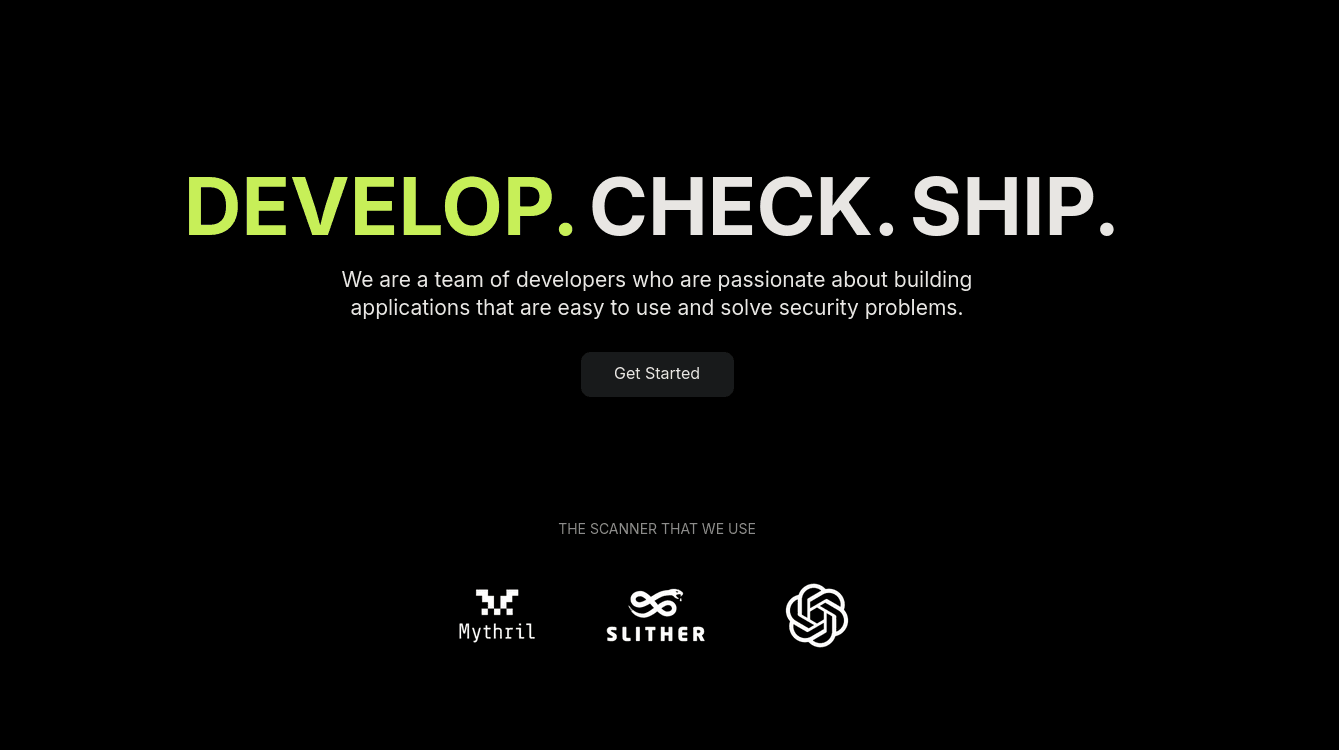
A developer-facing dashboard that scans smart contract repositories for vulnerabilities and mints an NFT certificate recording a completed scan, built by a five-person team with Byont Labs in the HvA blockchain semester.
What I built
Built full-stack features spanning GitHub OAuth flows, webhook-driven scan pipelines, the Prisma data model, and the ERC-721 contract integration for on-chain certificates.
Architecture
- GitHub OAuth + webhooks to trigger a scan on every push.
- Dockerized Slither and Mythril analysis per repository.
- Prisma/Postgres data model for users, repos, and scan outputs.
- ERC-721 smart contract for scan certificates.
Execution
- Built a Next.js dashboard with scan history and results views.
- Implemented LLM summaries to translate raw findings into clear explanations.
- Integrated IPFS for certificate metadata and retrieval.
Results
- Reproducible security scans for every code change.
- Plain-language explanations of each finding for non-specialists.
- An on-chain record that a scan was completed. The certificate shows that the automated scanners ran, not that the contract is free of vulnerabilities.